UOSSM Canada’s Lifesaving Impact During the Deir ez-Zor Floods

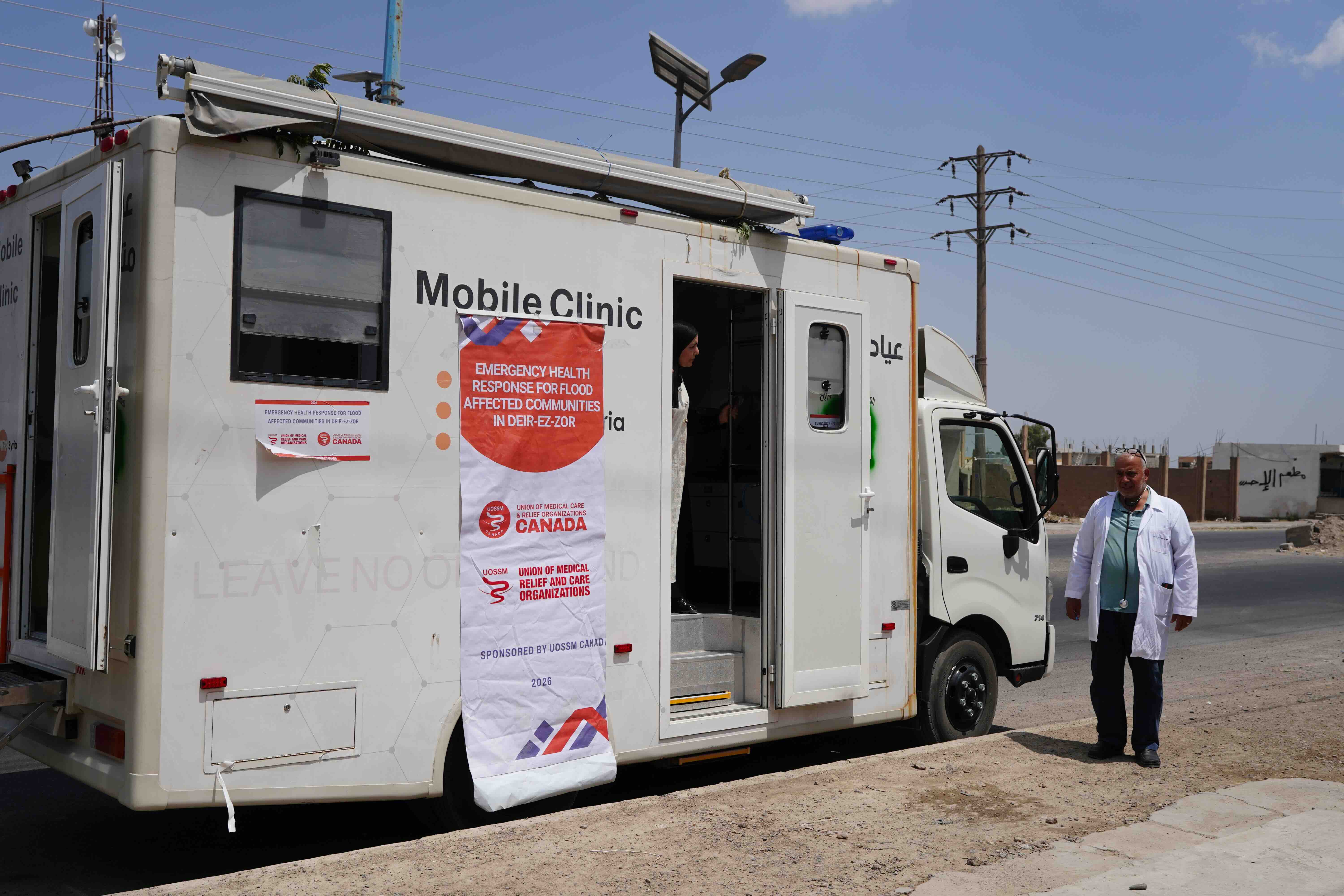
Deir Ez-Zor, Syria: Mobile Medical Units served 1,767 individuals in 17 days following the devastating river floods
Emergency Response: UOSSM Canada’s Lifesaving Impact During the Deir ez-Zor Floods
In late May, the Euphrates River experienced unprecedented flooding, swelling to three times its normal size and devastating the Raqqa and Deir ez-Zor governorates in Syria. Triggered by heavy rainfall and massive upstream dam releases, the floodwaters inundated low-lying communities, forcing thousands to flee their homes and submerging thousands of hectares of vital agricultural land right at the peak of the wheat harvest.
According to humanitarian assessments, over 27,000 people have been directly affected, with nearly 10,000 individuals displaced into temporary shelters or host communities. With bridges collapsed and over 40 critical water treatment plants knocked out of service in Deir ez-Zor alone, the region immediately faced a catastrophic disruption of essential health and sanitation services. Against this backdrop of destroyed infrastructure and rising waterborne disease risks, UOSSM Canada rapidly deployed emergency health and nutrition teams to the frontlines.
Speed to Impact: A 17-Day Emergency Deployment
When regional health infrastructure collapses, mobile healthcare becomes the only lifeline for isolated and displaced families.
Between June 14 and June 30, UOSSM Canada deployed 4 operational frontline teams to the hardest-hit areas of Deir ez-Zor:
- 2 Mobile Medical Units (MMUs) delivering primary healthcare.
- 2 Community Health Worker (CHW) Teams focusing on preventive nutrition and early disease detection.
In just 17 days, our frontline workers provided immediate relief to 1,767 total beneficiaries (832 medical + 935 nutrition), seamlessly integrating medical treatments with urgent nutritional interventions across 1,769 consultations.
Overperforming Need: Medical Demand Surges by 145%
The sheer scale of the displacement and the destruction of local clinics meant our teams were met with overwhelming demand.
Our Mobile Medical Units delivered 834 medical consultations to 832 unique patients in just over two weeks. This resulted in a 245% achievement rate compared to our initial target of ~340 consultations. This massive overperformance highlights the dire need for accessible healthcare as floodwaters cut off traditional medical routes.
Who We Are Treating:
- 40% Women (334 patients)
- 23% Boys (191 patients)
- 19% Men (154 patients)
- 18% Girls (153 patients)
- 12% Elderly Patients (60+ years old served via mobile clinics)
Early Lifesaving Detection: Combating Malnutrition in Crisis
Floods of this magnitude destroy crops, contaminate drinking water, and instantly elevate the risk of severe malnutrition—especially among children and pregnant women.
Our Community Health Worker teams reached 935 beneficiaries (106% of target), ensuring that the most at-risk demographics did not slip through the cracks:
- Children Under 5: 528 (56%)
- Pregnant & Lactating Women (PLWs): 407 (44%)
Proactive Nutritional Screenings & Distributions:
Our teams conducted 700 MUAC (Mid-Upper Arm Circumference) malnutrition screenings (461 children under 5 and 239 PLWs). Through these rapid field assessments, we identified and immediately referred 40 critical acute malnutrition cases (2 SAM children, 20 MAM children, and 18 acutely malnourished PLWs) directly to specialized care pathways.
To prevent the onset of malnutrition in recovering communities, our CHWs also distributed 786 preventive nutrition treatments, including 347 Multiple Micronutrient Supplement (MMS) treatments for PLWs, 261 Multiple Micronutrient Powder (MNP) sachets for children 6–59 months, and 178 Lipid-Based Nutrient Supplements (LNS-SQ) for children.
Your Support Fuels This Response
The data from our first 17 days in Deir ez-Zor tells a clear story: the demand for mobile medical intervention is staggering, and our teams are working around the clock to meet it.
The floods have washed away homes, crops, and essential infrastructure, but they have not washed away our commitment to the people of Syria. However, we cannot sustain this 245% surge in medical demand without your continued partnership.
Stand with the families of Deir ez-Zor today. Your donation ensures our Mobile Medical Units stay fueled, our pharmacies stay stocked, and our doctors stay on the frontlines.